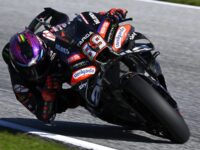
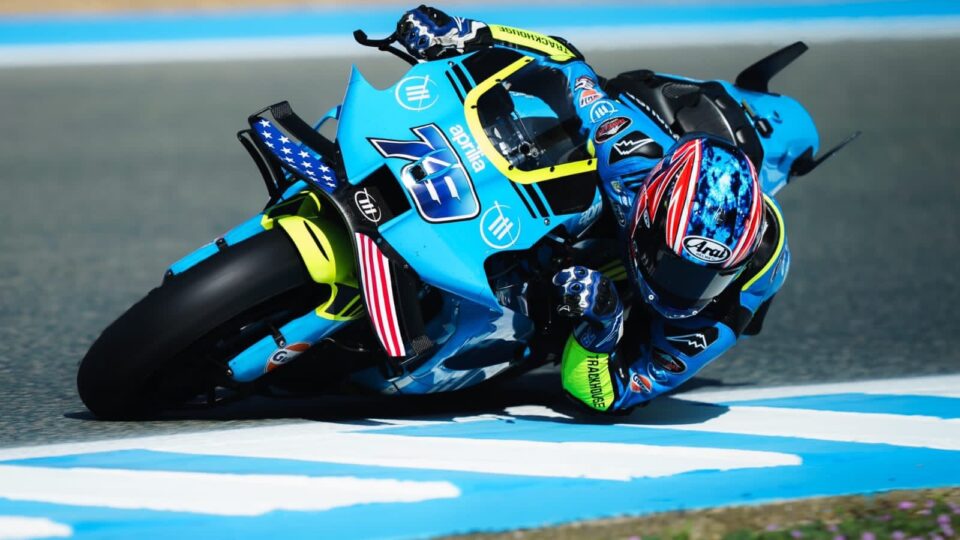

Ai Ogura’s third place at the French Grand Prix was the first MotoGP podium for a Japanese rider since 2012. The result finally ended the longest barren run for the country since Hideo Kanaya opened its rostrum account at the 1973 French Grand Prix.
That deserves a moment. Not a quick number buried in a race report. A genuine pause to understand what 14 years without a podium means for a nation that built the sport from the ground up.
Where It All Began
Japan did not arrive late to motorcycle racing. Honda entered the World Championship in 1959. Within three years the Japanese manufacturers were winning. Within a decade they had rewritten the record books. Honda, Yamaha, Suzuki and Kawasaki did not just compete in Grand Prix motorcycle racing. They defined it.
Japanese riders came later. But when they arrived, they arrived properly. Makoto Tamada was the last Japanese rider to win a premier class Grand Prix, taking victory for Honda at Motegi in 2004, a home win that felt like the beginning of something. It turned out to be the end.
Tadayuki Okada came closest of any Japanese rider to the world championship, finishing second in the 1997 500cc standings behind Mick Doohan. He made 21 podiums and won four Grands Prix, but the timing was wrong, he arrived during Doohan’s era of absolute dominance.
After Tamada’s 2004 win, Japan kept waiting. Riders came and went. Nakagami. Aoyama. Each arrived with promise. None delivered what the country had been building towards since Kanaya’s inaugural podium over half a century ago.
The Valencia 2012 Anomaly
Japan’s 93rd and final podium before Ogura came at the 2012 Valencia Grand Prix, where Katsuyuki Nakasuga rode a wet race charge to second place on a factory Yamaha in extraordinary circumstances.
It was both a fitting and cruel bookend to an era. A Japanese rider on Japanese machinery. A wet race that levelled the playing field. A result that felt like it deserved to be the start of something new rather than the end of an old chapter.
After Valencia 2012, the real drought began. What made it particularly striking was that the Japanese factories, paradoxically, began leaning more heavily towards European riders. Honda, Yamaha, Suzuki each of them looking to Spain, Italy and France for their lead riders. The irony was not lost on anyone.
The 14-Year Gap
To understand the scale of what Ogura ended at Le Mans, consider the numbers. In those 14 years between Nakasuga at Valencia and Ogura at Le Mans, MotoGP ran over 300 Grands Prix. Japan, the country that built most of the machines that competed in those races failed to reach the podium in a single one of them.
Following Ogura’s third place at Le Mans, Japan now has 94 podiums in total in the premier class. That 94th arrived not on a Japanese machine, but on an Italian one. Not for a factory Japanese team, but for an American organisation running Aprilia machinery. The sport moves in ways its founders could never have predicted.
Who Is Ai Ogura?
Ogura is the first rider from the Asia Talent Cup pathway to reach a MotoGP podium. That programme launched specifically to bring Asian riders into the world championship, was created partly with the awareness that Japan needed a new generation of premier class talent if the country was ever going to end its long wait.
Ogura delivered results immediately in every class he entered. He came close to ending the podium drought at the US Grand Prix earlier this season before a mechanical issue robbed him of a likely third place when running strongly. He had been knocking on the door all year.
At Le Mans he knocked it down. Starting from eighth on the final lap, he passed Pedro Acosta at Turn 3 on lap 23 with a move of precision and composure that spoke to everything that makes him dangerous in the closing stages of a race.
He is the only non-Spanish or Italian rider in the top 11 of the 2026 MotoGP championship. In a sport that has become increasingly dominated by European talent on European machinery, Ogura is carving out his own space.
What He Said Afterwards
The humility was typical. Ogura said the podium means a lot to him and to the Japanese, adding that he thinks all the Asian riders are developing well and that he hopes this result serves as motivation for them.
He also could not resist a quip. “The race is 27 laps,” he said. “Good that the pace showed up even if a bit late.”
When asked about his target next time, he answered with a smile. “Maybe in Japan,” he said, suggesting his first MotoGP victory might come at his home Grand Prix at Motegi.
The Bigger Picture
What Ogura’s podium represents goes beyond one rider and one result. It signals that the Asia Talent Cup pathway is delivering on its promise. It confirms that Trackhouse, the American team that signed him when others looked elsewhere, made exactly the right call. It gives every young Japanese rider watching from the paddock or from home a reference point that was missing for 14 years.
The premier class world championship title remains the one thing Japan has never achieved in the modern MotoGP era. No Japanese rider has won the premier class championship. The closest was Okada in 1997, who finished second. That particular piece of history is still waiting to be written.
But at Le Mans, on a grey Sunday afternoon in the Sarthe, Ai Ogura wrote his own line into the record books. A 14-year wait. A 27-lap charge from eighth. And a third place on the podium that his country had not seen since a wet race in Valencia, two world champions, three generations of machinery and a lifetime of near-misses ago.
Japan is back on the podium. Now the real question begins.