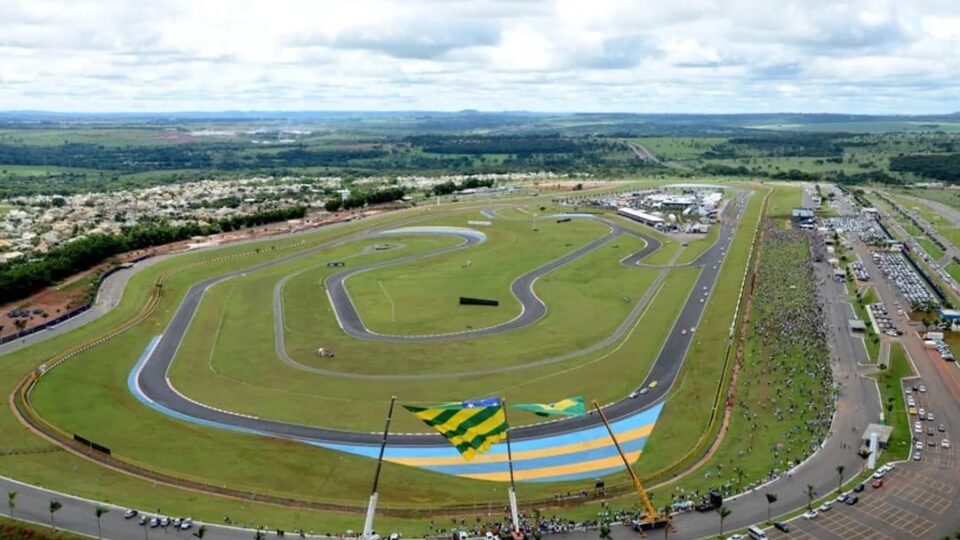
Some sporting returns feel routine. A calendar shuffle, a new contract, a familiar venue restored to the schedule. Brazil is not that. MotoGP’s return to Goiania in 2026 ends a 33 year absence from the Autodromo Internacional Ayrton Senna , and brings back one of motorcycle racing’s most passionate and emotionally charged relationships with a host nation. This is not just another grand prix. This is a homecoming decades in the making.
Where It All Began
The first Brazilian Grand Prix took place in Goiania in 1987, where Wayne Gardner became Australia’s first ever premier class champion by winning the inaugural race. The circuit hosted three consecutive editions before organisational and safety concerns removed Brazil from the calendar entirely. The sport returned to South America in 1992 at Interlagos in Sao Paulo, before eventually settling at the Nelson Piquet Circuit in Rio de Janeiro from 1995 through to 2004.
Those Rio years produced some of the most dramatic and historically significant moments in the sport’s history. In 1999, Alex Criville secured the 500cc World Championship with a victory in Brazil, finishing just under a second ahead of Max Biaggi after a tense race long battle. Three years later, Valentino Rossi clinched his second premier class title at the Rio de Janeiro Grand Prix, winning 11 of 17 races that season in one of the most dominant championship performances the sport has ever witnessed.
Rossi remains the most successful rider in Brazil’s grand prix history, winning there in 1997 in 125cc, 1999 in 250cc, and four consecutive times in the premier class between 2000 and 2003. For an entire generation of fans, Brazil and Rossi are inseparable.
The Final Chapter in Rio
MotoGP left Rio de Janeiro for good after its 2004 visit, with Makoto Tamada taking victory in what proved to be the circuit’s final grand prix. The track was later demolished as part of regeneration works ahead of Brazil hosting the 2016 Olympic Games. For over two decades, South America’s most passionate motorsport nation watched the world championship from the outside.
The absence felt wrong. Brazil’s love for motorcycle racing never diminished. The fanbase remained enormous, the connection to the sport remained deep, and the desire for a return never faded. Dorna made multiple attempts to bring the championship back, including a planned Rio return in 2022 that ultimately fell through when the new circuit failed to materialise.
A New Chapter at the Ayrton Senna Circuit
An agreement between MotoGP, the government of Goias and Brasil Motorsport has secured a five year deal running from 2026 to 2030, with the Goiania circuit investing heavily in a new track surface, paddock facilities, wider pit lane and upgraded medical centre to meet MotoGP’s strict requirements.
The circuit itself, officially named after Formula One legend Ayrton Senna, offers a genuine challenge. A combination of nine right hand and five left hand turns spread across 3.8 kilometres, with a gradual incline on the run to the start finish line and a downhill approach to Turn 1, creating a natural flow that should suit the MotoGP bike’s corner speed strengths.
What This Means for the Sport
Brazil is not just a race. It is a statement about MotoGP’s global ambitions under Liberty Media. A market of over 200 million people, with a deep cultural passion for motorsport and a growing appetite for motorcycle racing. MotoGP Chief Sporting Officer Carlos Ezpeleta described Brazil as a big market with enormous potential, calling the return one of the headline stories of the entire 2026 calendar.
Twenty two years is a long time to wait. But some things are worth waiting for.