The opening round of the 2026 MotoGP season in Thailand has already sparked an interesting question in the paddock. Is Ducati still the clear benchmark, or has Aprilia finally built a package capable of challenging them over a full season?
For the past few years Ducati has set the standard in MotoGP. The Desmosedici became the reference bike thanks to its powerful engine, strong rear grip and excellent electronics. Riders across multiple Ducati teams consistently fought for wins and podiums. The bike also proved adaptable to different riding styles which helped Ducati dominate both championships and race results.
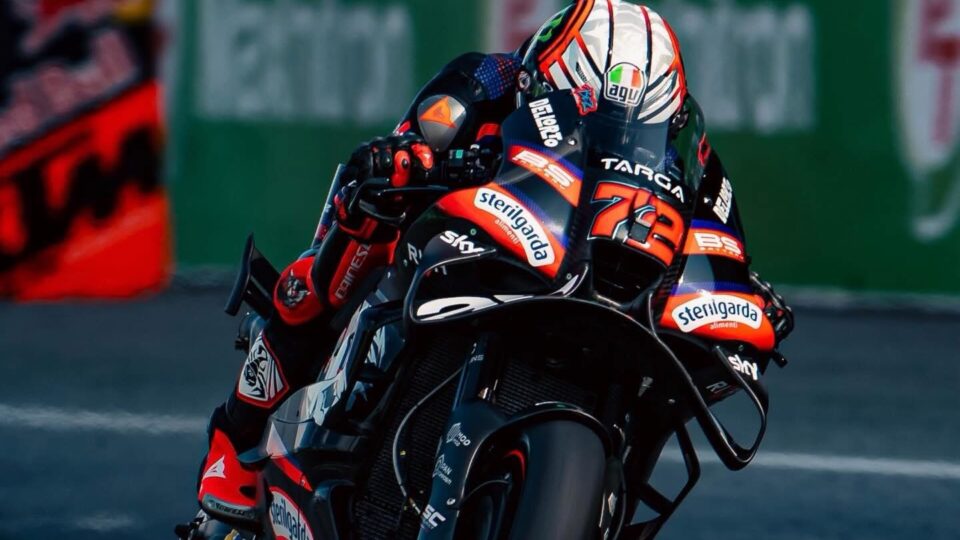
However the Thailand Grand Prix showed that Aprilia may now have the tools to challenge that dominance. Marco Bezzecchi delivered a commanding performance to win the race, while Jorge Martin finished fourth. More importantly the Aprilia RS GP looked competitive throughout the weekend in both race pace and tyre management. It was not simply a lucky result but a sign that the bike has reached a new level.
One of the most interesting parts of Aprilia’s progress is its aerodynamic philosophy. Over the last few seasons the Italian manufacturer has taken a very aggressive approach to aero development. Engineers in Noale have openly admitted that their philosophy is inspired by Formula One style thinking. The RS GP features complex wing structures, detailed side fairings and airflow management around the rear of the bike. The goal is to improve stability under braking and acceleration while also helping the bike change direction more smoothly.
While Ducati pioneered much of the aero revolution in MotoGP, Aprilia has focused on refining how that airflow works with the chassis. The result is a bike that looks extremely stable during corner entry and mid corner phases. Riders often mention that the Aprilia allows them to carry a lot of lean angle while still feeling confident at the front.
Ducati still holds some key advantages though. The Desmosedici remains one of the fastest bikes on the grid in terms of raw engine performance. It also benefits from a huge amount of development data because so many riders compete on Ducati machinery. That allows the team to refine setups quickly and respond to problems faster than most manufacturers.
The Thailand round also showed that Ducati still has work to do in certain situations. Marc Marquez retired from the race after suffering a puncture while Francesco Bagnaia finished ninth. Those results were unusual for a Ducati team that normally expects to fight at the front.
After just one race it would be wrong to say that Ducati has lost its position as the benchmark. But Aprilia has clearly closed the gap. The RS GP now combines strong acceleration, stable handling and a very sophisticated aerodynamic package.
If the Thailand result is any indication the 2026 season could finally deliver a genuine technical battle between the two Italian manufacturers. For the first time in several years Ducati may not be racing alone at the front.