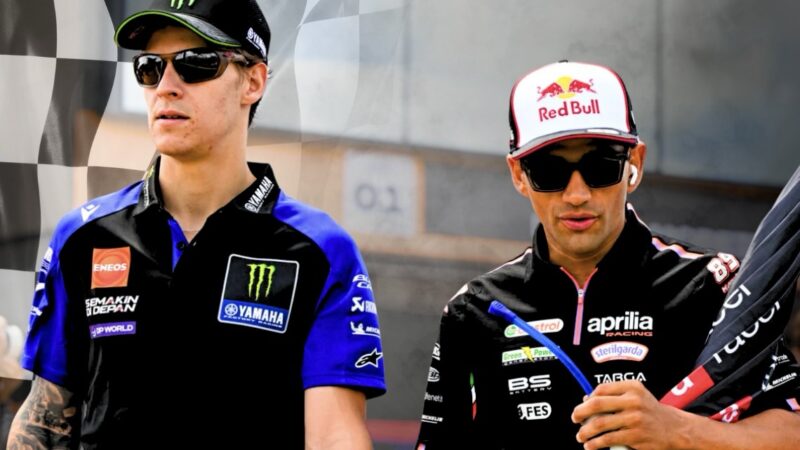
The dinner tables were set. The wine was poured. Liberty Media had flown in its most senior executives from the United States specifically to sit down with MotoGP’s manufacturers and build bridges at a lavish event in Jerez.Nobody from Aprilia turned up. Nobody from KTM. Nobody from Yamaha.The empty chairs said everything that months of careful diplomatic language had been…
Aprilia, KTM and Yamaha boycotted Liberty Media’s official Jerez dinner. The MSMA wants a percentage-based revenue share instead of fixed payments, with MotoGP generating around 460 to 480 million euros annually. Liberty responded by switching tactics, negotiating individually with manufacturers, with Honda and Ducati reportedly moving closer to signing.
Jack Miller declared giving up on Yamaha’s V4 project is not an option after the Jerez test, saying every area of the bike needs work but insisting the machine is only six to eight months old and that the team is still gathering data to understand its strengths and weaknesses. His stance stands in stark contrast to Quartararo, who admitted he no longer wants to give his all on the V4.
MotoGP is getting louder inside the helmet. Not from the engine. From Race Direction.The Jerez test on April 28 marked another milestone in one of the sport’s longest running and most quietly significant development projects. Fabio Quartararo tested the latest version of MotoGP’s in-helmet radio system and described it as having made a big step, though he warned that sound…
Fabio Quartararo confirmed MotoGP’s helmet radio system made a big step forward at the Jerez test, saying he could hear it but that sound clarity still needs work. The system currently sends one-way pre-recorded safety messages from Race Direction directly into the rider’s helmet, with a receiver built into the leathers and a speaker inside the helmet padding. A two-way system allowing riders to respond is planned for a future phase.
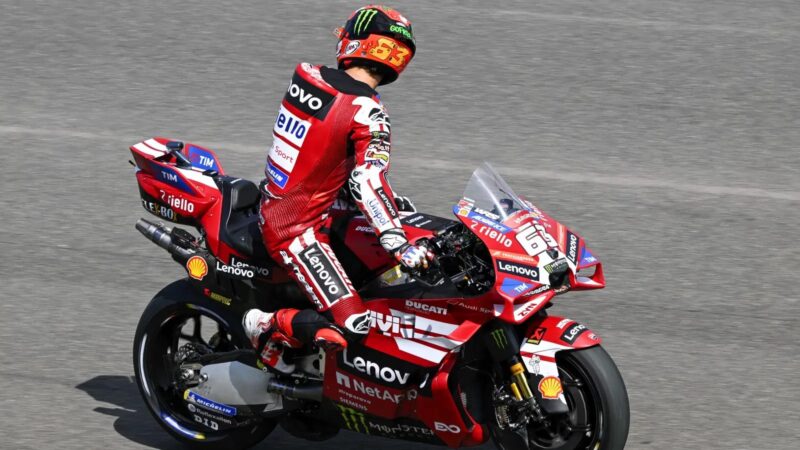
The FIM Grand Prix Commission has banned MotoGP wildcards from 2027, with the rule applying to all manufacturers regardless of concession rank. Wildcards in 2026 cannot run 850cc machinery with immediate effect. The start delayed countdown procedure changes to the five minute board from the three minute board immediately. Tyre pressure monitoring continues into 2027. Heart rate monitors are now permitted in Moto2 and Moto3.
The official MotoGP 26 video game launched on April 29 with a fully reworked physics system, Dynamic Rider ratings and a deeper career management structure. The game is available on PlayStation 5, Xbox Series X and S, Nintendo Switch, ROG Xbox Ally and PC via Steam and the Epic Games Store, featuring all official 2026 riders, teams and circuits. Dynamic Rider ratings will update in real time alongside the actual 2026 championship results.
Defending champion Kyle Ryde topped the final preseason test at Oulton Park with a 1:32.913 , setting the benchmark ahead of Round1 at the same circuit on May 2 to 4. Ryde switches from the Yamaha R1 that brought him back-to-back BSB titles to the new Ducati Panigale V4R with Nitrous Competitions Racing. Bradley Ray on the McAMS Yamaha and Scott Redding were his closest challengers across the two day test.
Aprilia became the last of the five MotoGP manufacturers to run its 850cc prototype on track, completing the first laps of the RS-GP 850 at a wet Jerez during a private test on Wednesday. Test rider Lorenzo Savadori was at the controls for the track debut, with the bike featuring 2027-spec aerodynamics including a revised nose profile and protruding front wing but no seat wings. Rain could not stop them completing several laps.
Aprilia debuted a striking new aerodynamic solution at the Jerez test, a pair of wings mounted on the upper fairing around the screen area of Marco Bezzecchi’s RS-GP. The wings are positioned much higher than Ducati’s dual-plane side wings, with the top plane curved to generate downforce and the endplates sculpted to manage airflow around the rider, potentially reducing drag while boosting the effectiveness of the leg wings.