MotoGP is back in Brazil. After 22 years away, the paddock rolls into Goiânia this weekend for Round 2 of the 2026 season. For most riders on the current grid, this is completely uncharted territory. No data. No references. No muscle memory from previous visits. That is what makes Sunday’s race so genuinely unpredictable and so worth watching.
Here is everything you need to know about the circuit that is about to write the next chapter in MotoGP history.
The Circuit That Refused To Die
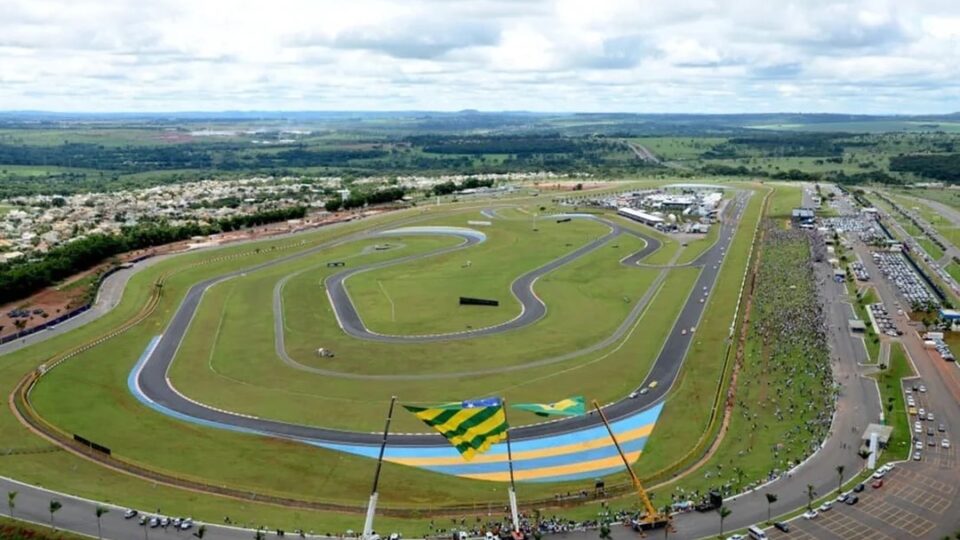
The Autódromo Internacional Ayrton Senna opened in 1974, designed to meet Brazil’s growing demand for high quality racing venues in a country with a deep passion for motorsport.  Named after Ayrton Senna, the greatest driver Brazil ever produced, the track carries a weight of expectation that goes far beyond its 3.835 kilometre layout.
The circuit underwent major renovations in 2014, and then again before MotoGP’s return in 2026. Improvements included resurfacing, pit lane widening, paddock upgrades and an updated medical centre.  This was not a cheap face lift. This was a full scale transformation driven by one goal: getting MotoGP back.
MotoGP and the state of Goiás signed an agreement running through to 2030.  This is not a one off visit. Brazil is back on the calendar to stay.
What The Track Looks Like
The layout combines nine right hand turns and five left handers across 3.8 kilometres of resurfaced asphalt.  On paper that sounds straightforward. On a MotoGP bike at full attack it is anything but.
A lap starts with a gradual climb from the final corner to the start finish straight, followed by a downhill run into Turn 1. The majority of the circuit is flat, with a natural flow through the corners that suits bikes with strong corner speed. 
Lap times are expected to sit around one minute and 16 seconds, which would make Goiânia one of the fastest circuits on the entire 2026 calendar. Only the Sachsenring, at 3.67 kilometres, is shorter. Goiânia could rank alongside Phillip Island, Buriram, Silverstone and Mugello among the fastest tracks in the sport. 
Fast corners. Short laps. High average speeds. The riders who go well at Phillip Island and Buriram should feel right at home.
The MotoGP race is scheduled over 31 laps, covering 118.89 kilometres. That is the most laps completed at any MotoGP venue since the 32 lap United States Grand Prix at Laguna Seca in 2013. 
The History You Need To Know
Goiânia is not new to grand prix motorcycle racing. It just feels that way.
The circuit hosted the Brazilian GP from 1987 to 1989, before the race moved first to Interlagos in 1992 and then to Rio de Janeiro between 1995 and 2004.  Three races. Three years of history. Then silence for over three decades.
The 1987 race deserves its own story. Wayne Gardner sealed the 500cc World Championship at Goiânia in front of 30,000 fans, winning after 32 gruelling laps in temperatures above 30 degrees. He beat Eddie Lawson and Randy Mamola to take both the race win and the title in the same afternoon.  That was the day Australia got its first ever premier class world champion. It happened right here.
In 1988, Eddie Lawson won the 500cc race ahead of Gardner and Kevin Schwantz.  Three of the greatest names in the sport’s history, scrapping around a Brazilian circuit that barely had the infrastructure to host them. In 1989, Kevin Schwantz took the 500cc victory on his Suzuki. 
Then Brazil went quiet for a long time. MotoGP made its final visit to the country in 2004 at Rio de Janeiro, where Makoto Tamada won in one of his only two career victories.  The circuit was later demolished to make way for the 2016 Olympic Games. Brazil lost its race and lost its track at the same time.
MotoGP tried and failed to bring Brazil back on multiple occasions.  A planned return to Brasília in 2014 collapsed when organisers could not secure funding. A 2019 deal to build an entirely new circuit in Rio fell apart in 2021 when the Rio Motorsports Park never broke ground. Brazil chased MotoGP for years. Finally, Goiânia delivered.
The Brazilian Riders Who Make This Special
Diogo Moreira arrives at Goiânia as the 2025 Moto2 World Champion, the first Brazilian to win a world title in the MotoGP World Championship. He now races in the premier class with LCR Honda and carries the expectations of an entire nation. 
That is not a small thing. Brazil has waited decades for a world champion. Now it has one, and he is racing at home, on a circuit that last hosted grand prix bikes before most of the current riders were born.
Franco Morbidelli also carries a family connection to the country,  adding another layer to what already feels like a race loaded with meaning.
What To Expect On Sunday
Nobody on the current grid has data from this track. Every team arrives with simulations and guesswork. The riders who adapt fastest in Friday practice will set the tone for the whole weekend. Tyre management on fresh asphalt at high temperatures adds another unpredictable layer.
Goiânia’s tropical climate adds an unpredictable element, particularly during the rainy season.  March sits right on the edge of that window. If rain comes, this race becomes a lottery in the best possible sense.
Pedro Acosta leads the championship from Thailand. Marco Bezzecchi is seven points back. Marc Márquez is already 28 points down and hunting. The title fight is already alive, and it is coming to a circuit nobody truly knows.
Brazil waited 22 years for this. Based on the history, the setting and the stakes, it was worth every single one of them.