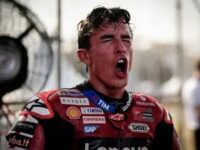
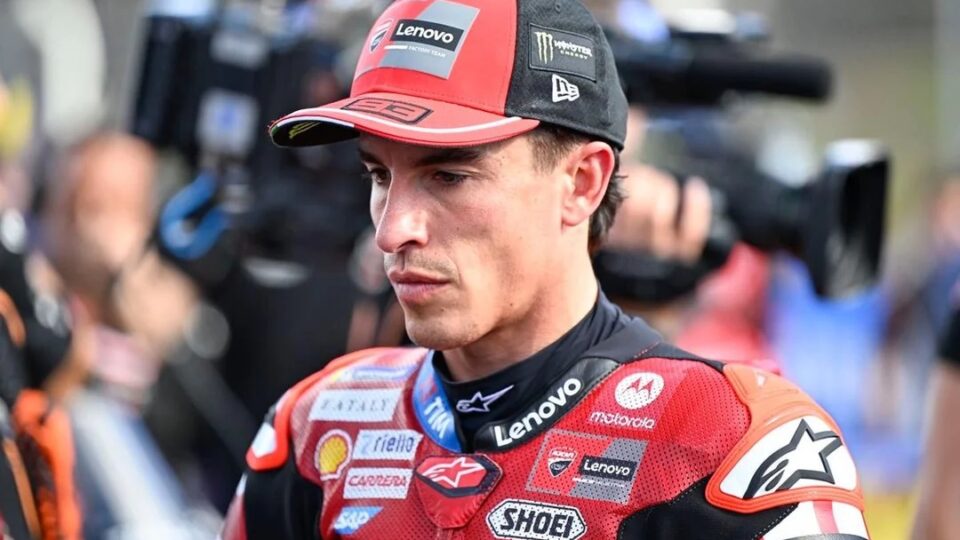

There is a question Marc Marquez gets asked constantly. Journalists ask it at every press conference. Fans ask it on social media. Even his own team wants to know the answer. Are you at 100 percent?
His answer is honest and unsettling in equal measure. He no longer knows what his 100 percent is.
For a man who has built his entire career on the pursuit of absolute limits, that admission carries more weight than any race result. It tells you everything about what the last six years have cost him.
The Accumulation of Damage
Marc Marquez is 33 years old. He refuses to use age as an excuse. But his body tells a different story. After a masterful 2025 season, 11 victories and a seventh premier class title., he approaches 2026 with brutal realism. Each winter is getting longer. Each recovery more demanding.
It is not age that makes things more difficult, he says. It is the injuries. And in his case, they are piling up.
The list is long and the details are painful. The arm fracture at Jerez in 2020 that nearly ended everything. The multiple surgeries that followed. The years of limited function in his right arm. The crashes and setbacks that punctuated his recovery. Then last season, just as he had reclaimed his place at the very top of the sport, another serious blow.
A complex shoulder fracture sustained in a collision with Marco Bezzecchi at the Indonesian Grand Prix. Initially deemed non-surgical, it ultimately required an operation after there was no improvement. The result was withdrawal from the end of the 2025 season and a return to the saddle only in January.
Seven world titles. And the champion still cannot tell you what full fitness feels like.
What Happens When You No Longer Know Your Ceiling
Marquez explained that in the past he always knew exactly how far he could push himself. That feeling is no longer clear. His body has changed, and this makes it harder to understand his real limits on the bike.
He put it plainly on the Tengo un Plan podcast. One of the questions the press asks me is are you at 100 percent, he said. And my answer is I no longer know what my 100 percent is after an injury. You don’t know. Some injuries affect you more, others less. But after opening up your body, your 100 percent drops. Maybe it drops by three percent, ten percent or twenty percent. But it drops. And so you don’t know what your 100 percent is. You have to keep pushing.
That is not the language of a rider making excuses. That is the language of a man doing an honest inventory of what he has left and trying to race within it.
The Physical Consequences on Track
The impact of his physical condition is not theoretical. It is showing up in race results. Marquez admitted he does not have the same strength he had in 2025 and has adjusted his approach to the 2026 season accordingly. He revealed he reverted to older aerodynamics for the start of the year, a package that is less physically demanding to ride, even if it is not as fast.
At the moment I don’t have the strength I had last year, he said. So I need a bike that turns a little more, that goes more in the right line and doesn’t force it as much.
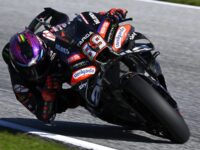
That is a significant admission from a man who spent 2025 dominating the field partly through sheer physical aggression. The GP26 is a demanding machine. Riding it at its full potential requires strength, commitment and the kind of physical confidence that comes from feeling completely at home in your own body. Right now, Marquez is still searching for that feeling.
Through the first three rounds of 2026, he has not made it onto the podium on a Sunday. That makes nine grand prix races without a win, unusual for someone of his calibre.
The Psychological Battle
What makes Marquez’s situation so compelling is the gap between what his mind wants and what his body currently allows. Mentally, he still feels young. The internal engine is still running at full speed. But human mechanics now demand more attention, more management, more strategy.
He also discussed the psychological side of returning to circuits where he has previously been badly hurt. He used Jerez as an example, the track where his 2020 crash started everything. That race is next. It carries complicated history and it will test him in ways that go beyond lap times.
There is something quietly extraordinary about the fact that Marquez is still here, still racing, still competing at the front end of the fastest motorcycle series on the planet, while simultaneously admitting he does not fully understand his own body anymore. Most riders would have used that as justification to step back. Marquez uses it as a reason to keep learning.
What Comes Next
At the Ducati launch in January he said he needed to analyse his condition and try to discover what his ceiling truly is. He described a long and mentally tough winter of physiotherapy and low weight gym sessions, but said he was feeling better step by step.
The improvement is real. His pace in 2026 has been there at various points, the Sprint win in Brazil was a reminder that when everything clicks, he is still the fastest man on the grid. The Sunday results have not followed, but the speed is not gone. The question is whether the physical platform can consistently support what his mind is still capable of demanding.
He knows the answer to that question is still being written. He does not know what his 100 percent is. So he keeps pushing to find out.
That, in itself, tells you more about Marc Marquez than any race result ever could.