In motorcycle racing, manufacturers come and go. Dynasties rise and fall. But what Ducati has built over the past four years represents something genuinely unprecedented in MotoGP history, a period of total, suffocating, almost embarrassing dominance that has forced every rival back to their drawing boards and rewritten what a premier class motorcycle needs to be.
The Beginning of the Revolution
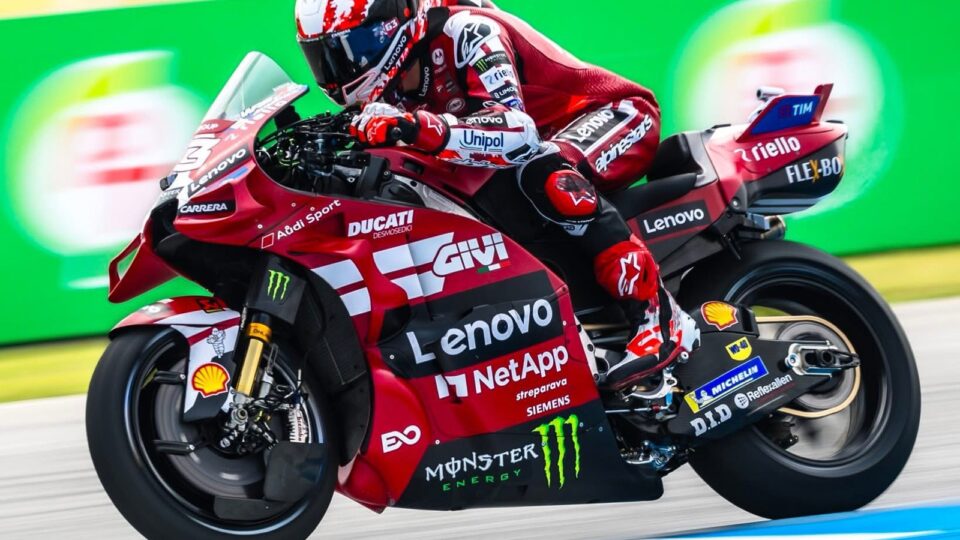
Ducati’s road to domination was not overnight. For years the Desmosedici was regarded as a specialist tool brutally fast in a straight line, punishing to ride, and dependent on a very specific riding style that only a handful of riders could truly exploit. Casey Stoner won the 2007 title on it through sheer supernatural talent. But for much of its early history, the bike was as likely to destroy a rider’s confidence as deliver a championship.
The turning point came through a fundamental shift in development philosophy. Rather than chasing a single perfect setup, Ducati began building a platform a bike that could be adapted, adjusted, and personalised to suit different riding styles. The aerodynamic programme accelerated. The electronics became more sophisticated. The engine architecture evolved. And suddenly the Desmosedici was not just fast, it was versatile.
The Aerodynamic Arms Race
No single element defines the modern Ducati more than its aerodynamics. While rivals were still treating wings and fairings as secondary considerations, Ducati invested heavily in downforce solutions that transformed cornering stability, braking performance, and drive out of slow corners. The winglets, the holeshot devices, the ride height systems innovations that originated at Borgo Panigale before being copied, sometimes clumsily, by the rest of the field.
The aerodynamic advantage gave Ducati riders something priceless confidence. When a rider trusts their machinery completely, lap times follow naturally. And when that machinery is also the fastest in a straight line, the combination becomes almost impossible to beat consistently.
The Numbers That Tell the Story
The statistics of Ducati’s recent dominance are staggering. Multiple manufacturers’ championships. Factory and satellite riders winning races across the same weekend. At certain points in recent seasons, Ducati-powered machines have occupied the top eight positions in the championship standings simultaneously. No manufacturer in the four-stroke MotoGP era has achieved anything remotely comparable.
The depth of the programme is equally remarkable. Factory riders Bagnaia and Marquez operate at the absolute cutting edge. But satellite teams., Gresini, VR46, Pramac receive machinery capable of winning grands prix independently. Ducati has not just built a fast bike. They have built an entire ecosystem of competitiveness.
What Rivals Must Do
Ducati’s dominance has forced an industry-wide rethink. Aprilia have made the most significant strides in closing the gap, with Bezzecchi’s performances in 2025 demonstrating genuine progress. KTM, despite financial difficulties, remain dangerous in the right conditions. But Honda and Yamaha face the most fundamental challenge rebuilding their philosophies from the ground up rather than incrementally improving failed concepts.
The 2027 850cc regulation change offers every manufacturer a reset. Whether anyone can genuinely challenge Ducati’s engineering superiority when that moment arrives remains the defining question of MotoGP’s immediate future.
The Standard Has Been Set
Ducati did not stumble into dominance. They earned it through investment, innovation, and an engineering culture that demands constant improvement rather than comfortable consolidation. They set a standard that has permanently raised expectations for what a MotoGP machine can achieve.
Beating them will require something extraordinary. And MotoGP is all the better for that challenge existing.
Deep Dive · 3 min read
Deep Dive


Red, Dominant and Unstoppable: How Ducati Built MotoGP’s Greatest Ever Machine
Advertisement
Advertisement
Advertisement
More Stories