There is a question that has quietly grown louder in the MotoGP paddock over the past several seasons. The bikes are faster than ever. The riders are more talented than ever. The technology is more sophisticated than ever. And yet, somehow, the racing occasionally feels less exciting than it used to be. Fans notice it. Riders acknowledge it privately. And the governing body has responded with regulation changes designed to address it directly. The culprit? Aerodynamics.
The Dirty Air Problem
Modern MotoGP bikes are aerodynamic masterpieces. Wings, fairings, ground effect bodywork, downwash ducts, every surface is designed to generate downforce, improve braking stability, and maximise corner speed. The result is machinery that is genuinely breathtaking in isolation. But put two of these machines together on track and a fundamental problem emerges.
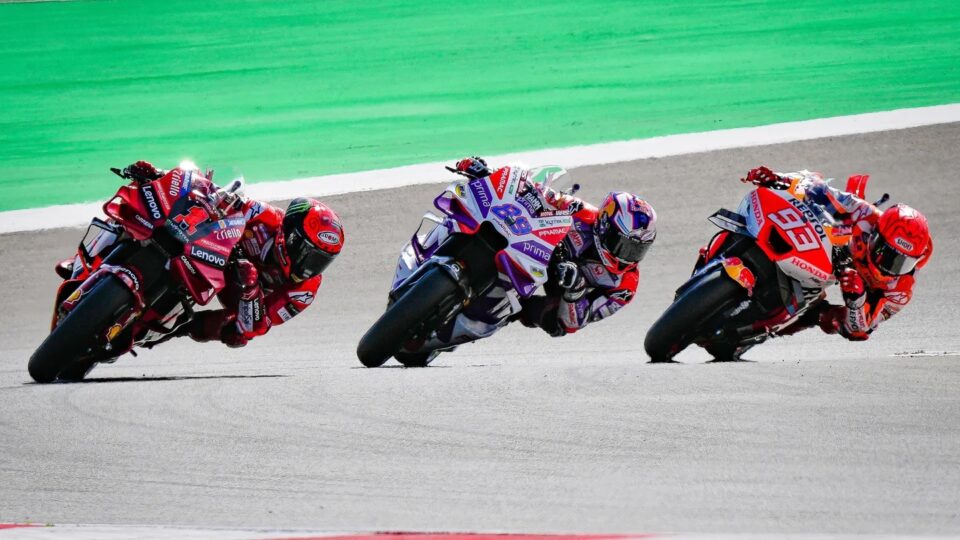
When a rider follows another bike closely, they enter a pocket of unstable air. Instead of smooth airflow pressing the front tyre into the track, the chasing rider experiences fluctuating aerodynamic load, making the bike harder to control during braking and corner entry. The faster the bikes go, the worse the effect becomes. A rider may gain ground in the slipstream on a straight, but by the next braking zone, compromised front end stability makes a genuine overtake attempt extremely difficult.
Many riders feel that while aerodynamics enables spectacular lap times, it worsens the racing itself, creating strong turbulent airflow behind the leading bike that makes it difficult to stay close without losing front end pressure.
Ride Height Devices Make It Worse
Aerodynamic downforce is only part of the problem. Ride height devices, especially the rear ones that now function on practically every corner exit, have taken all rider control out of corner exit by allowing everyone to lock the rear suspension and accelerate smoothly, further reducing the possibility of pulling off something special.
The combination of maximum aerodynamic downforce under braking and seamless electronic corner exits leaves very few windows where a following rider can exploit a genuine advantage. MotoGP has inadvertently engineered out some of the human unpredictability that made wheel to wheel battles so compelling.
What the 2027 Rules Are Designed to Fix
The sport’s governing body has heard the criticism and responded decisively. MotoGP’s current aerodynamic regulations will be banned from the end of 2026 and replaced by lower downforce bodywork, with the aim that reduced downforce will allow riders to overtake more easily and improve the quality of racing.
The 2027 regulations will reduce the aerodynamic advantage of large winglets and minimise dirty air, with manufacturers having less room for wide, prominent wings. Ride height devices and holeshot systems will also be fully banned, with the aim of making racing rely more on rider skill than aerodynamics.
The hope is genuine. Whether the changes go far enough remains the great unanswered question of the 2027 era.
The Balance Between Innovation and Spectacle
MotoGP has always been a sport in tension with itself. Engineers push technology to its absolute limits because that is their job. Fans want spectacular, unpredictable wheel to wheel racing because that is why they watch. Over reliance on aerodynamics has made bikes harder to overtake because of the dirty air generated, and the new regulations aim to solve this by bringing the focus back to rider skill.
The 2027 reset offers MotoGP a genuine opportunity to recalibrate. To keep the technological brilliance that makes the sport unique while restoring the human drama that makes it unmissable.
Get that balance right, and MotoGP will be extraordinary. The whole paddock is watching.
Deep Dive · 3 min read
Deep Dive


Why MotoGP Bikes Are Faster Than Ever But Harder to Pass Than Ever Before
Advertisement
Advertisement
Advertisement
More Stories