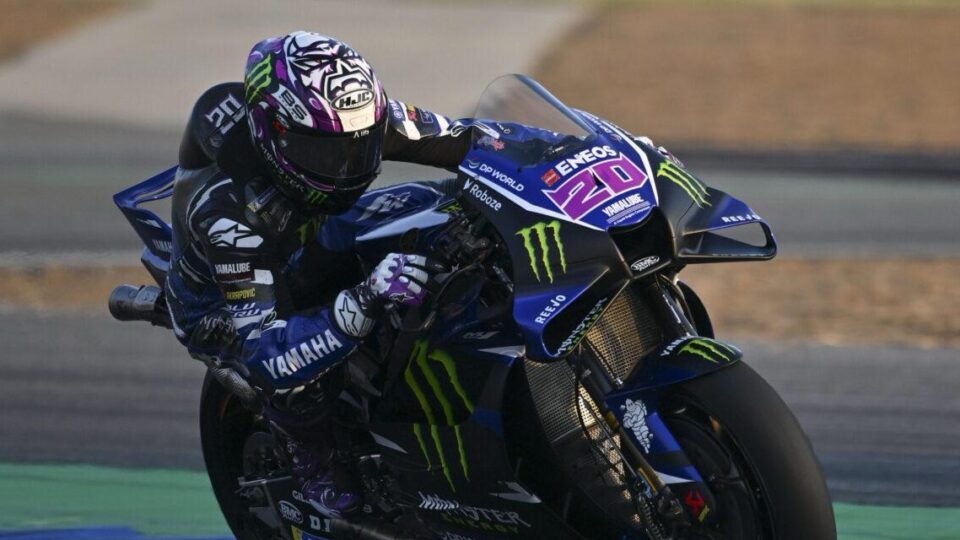
Yamaha arrived at the 2026 MotoGP season opener in Thailand with a new engine, a bold vision, and considerable hope. They left Buriram with a brutal reality check. The new V4-powered M1 was comprehensively the slowest machine on the grid, and Yamaha managing director Paolo Pavesio faced the media alone, his riders notably absent behind a factory-imposed media blackout. His words were honest, measured, and sobering. There is, he admitted, a mountain to climb.
The Numbers Tell a Brutal Story
In qualifying, none of the four Yamaha bikes progressed to Q2, with Fabio Quartararo ending up 16th on the grid as the best of the Yamahas. In the grand prix, Quartararo led the quartet of M1s home in 14th, over 30 seconds behind race winner Marco Bezzecchi on the factory Aprilia. That is more than one second per lap on one of MotoGP’s shorter circuits. The V4 was slower through the speed traps, struggling for rear grip, and less agile than its inline-four predecessor. For a manufacturer with Yamaha’s history and resources, these are deeply uncomfortable numbers.
Why Switch to V4 at All?
The decision to abandon the inline-four M1 — the same architecture that delivered Quartararo’s 2021 world championship was not taken lightly. Yamaha introduced the V4 for the 2026 season with the explicit goal of learning fundamental things that will be transferred directly to their 2027 machine , ahead of the switch to 850cc regulations. The V4 is not purely a 2026 racing project., it is an investment in the future. Every kilometre, every data point, every failure feeds directly into the next generation of machinery.
Yamaha’s decision was also influenced by the 2027 aerodynamic regulations, which favour a narrower machine for the new 850cc era. The inline-four, for all its qualifying brilliance in Quartararo’s hands, was never going to form the architectural foundation of a 2027 title contender.
Pavesio’s Honesty and the Road Ahead
Pavesio was open about the deficit, confirming Yamaha had consciously sacrificed single-lap performance to pursue greater race consistency — a trade-off that produced mixed results in Thailand. New engines are not expected until May. Development direction remains unclear. Yamaha have even admitted they are fifteen years behind with the V4 , a staggering admission from a manufacturer of their stature.
Yet Pavesio’s commitment remained firm. One step at a time. One second at a time. No magic, no shortcuts.
A Calculated Sacrifice
Yamaha’s 2026 crisis is real, but it is also deliberate. This is a manufacturer knowingly enduring short-term pain for long-term gain. The 850cc reset of 2027 represents their genuine opportunity to return to the front. Whether the V4 lessons translate into a competitive machine in time remains the defining question of Yamaha’s immediate future.
The mountain is real. But Yamaha chose to climb it. Now they must reach the summit.
Deep Dive · 2 min read
Deep Dive


Yamaha’s V4 Gamble: A Mountain to Climb or a Bridge to the Future?
Advertisement
Advertisement
Advertisement
More Stories